Do Gutter Guards Actually Work?
It's one of the most common questions we hear from homeowners: Are gutter guards worth it, or are they just an expensive add-on that doesn't deliver?
The honest answer is: it depends on which type you install, what kind of trees surround your home, and what you expect them to do.
This guide breaks down how gutter guards work, what they do well, where they fall short, and how to figure out whether they make sense for your home.
What Gutter Guards Are Actually Designed to Do
Gutter guards don't eliminate maintenance. That's the first thing to get straight.
What they do is reduce how often debris collects inside your gutters. Instead of leaves, twigs, and seed pods falling directly into the channel, a gutter guard acts as a barrier — keeping the bulk of debris on top where wind and rain can clear it, while allowing water to pass through into the gutter below.
Done right, that means fewer clogs, less standing water, and longer intervals between cleanings. Done wrong — or with the wrong product — it means debris gets trapped under the guard, water overshoots the gutter during heavy rain, and you're back on a ladder anyway.
The difference almost always comes down to product quality and proper installation.
The Main Types of Gutter Guards
Not all gutter guards are the same, and the type matters significantly.
Mesh or micro-mesh screens
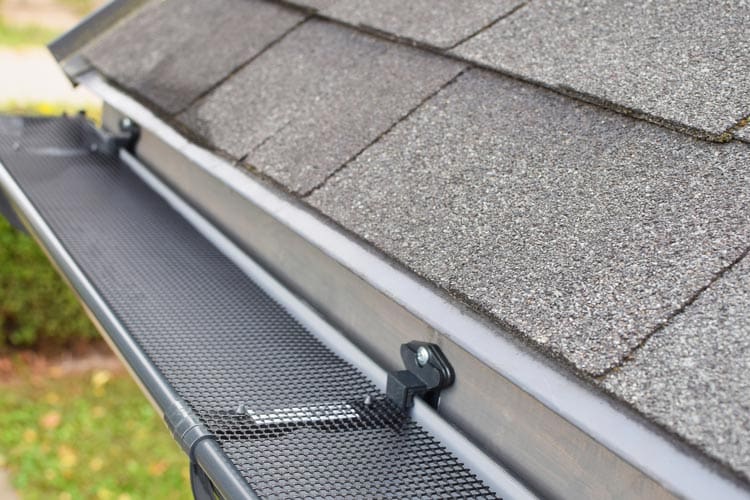
Micro-mesh guards are the most effective option for most homes. They use a fine metal screen that allows water to flow through while blocking debris — including small particles like pine needles and shingle granules that coarser guards let in. Quality micro-mesh products are typically made from stainless steel and attach directly to the gutter and roofline. These are the type we install at K Brothers because they hold up in Missouri's weather and actually perform over time.
Reverse curve or surface tension guards
These work by directing water around a curved surface and into the gutter below, while debris falls off the edge. They can work well in light-debris environments but tend to struggle with heavy rainfall — common in southwest Missouri — where water volume exceeds what the curve can direct. They're also more visible from the street.
Foam inserts and brush inserts
Both foam and brush-style guards sit inside the gutter channel and let water pass through while catching debris. In theory, they're simple and inexpensive. In practice, they trap small debris, promote moss and algae growth, and can be difficult to remove and clean. We don't recommend them.
Basic screen or perforated covers
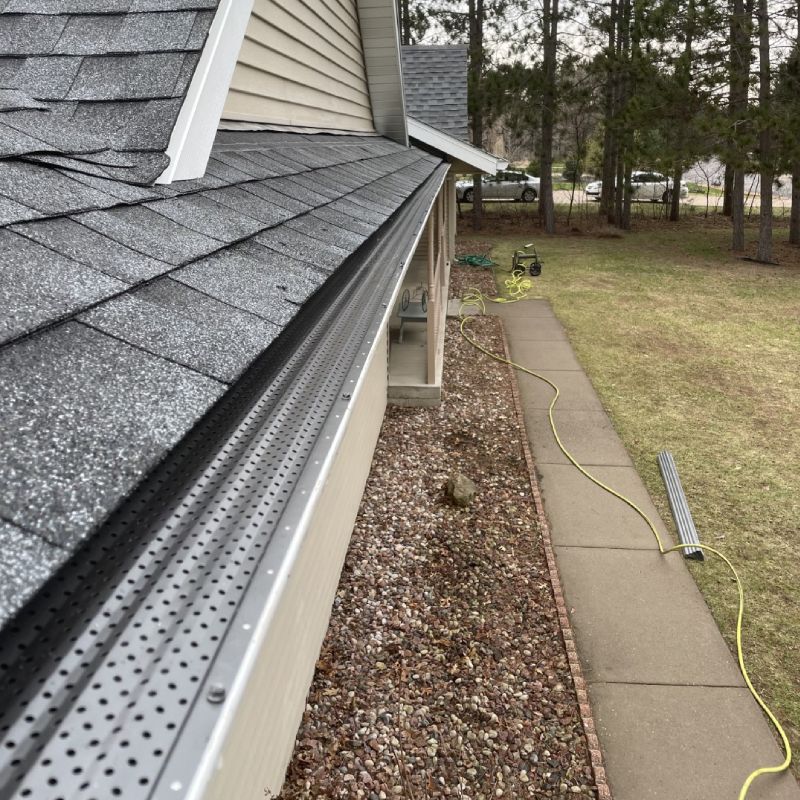
These are the most common DIY option — flat screens or covers with holes punched through. They stop large leaves but let small debris through, and they tend to sag, shift, or pull away from the gutter over time. They're better than nothing, but not by much.
What Gutter Guards Do Well
When you have quality micro-mesh guards professionally installed, here's what you can reasonably expect:
Fewer clogs. The volume of debris reaching the gutter channel drops substantially. For homes with moderate tree coverage, annual cleaning may become sufficient where twice-yearly cleaning was previously required.
Less standing water. Debris buildup is the primary cause of standing water in gutters. Reduce the debris and you reduce the moisture that accelerates corrosion and attracts pests.
Reduced ice dam risk. In Missouri winters, gutters clogged with wet leaves and debris are more likely to freeze and contribute to ice damming. Cleaner gutters drain more efficiently and are less vulnerable.
Longer gutter lifespan. Water and debris sitting in a gutter degrades the material over time. Guards that keep gutters cleaner extend their functional life.
Where Gutter Guards Fall Short
No product eliminates gutter maintenance entirely, and any company that tells you otherwise isn't being straight with you.
Fine debris gets through. Even the best micro-mesh guards will allow some small particles — roof grit, pollen, seed casings — to pass through and accumulate over time. Gutters with guards still need occasional cleaning, just less frequently.
Heavy rain events can overwhelm them. Southwest Missouri sees some significant spring storms. In heavy downpours, water volume can exceed what some guards are designed to handle, causing water to sheet over the front of the guard rather than entering the gutter. This is a real limitation, particularly with surface tension designs.
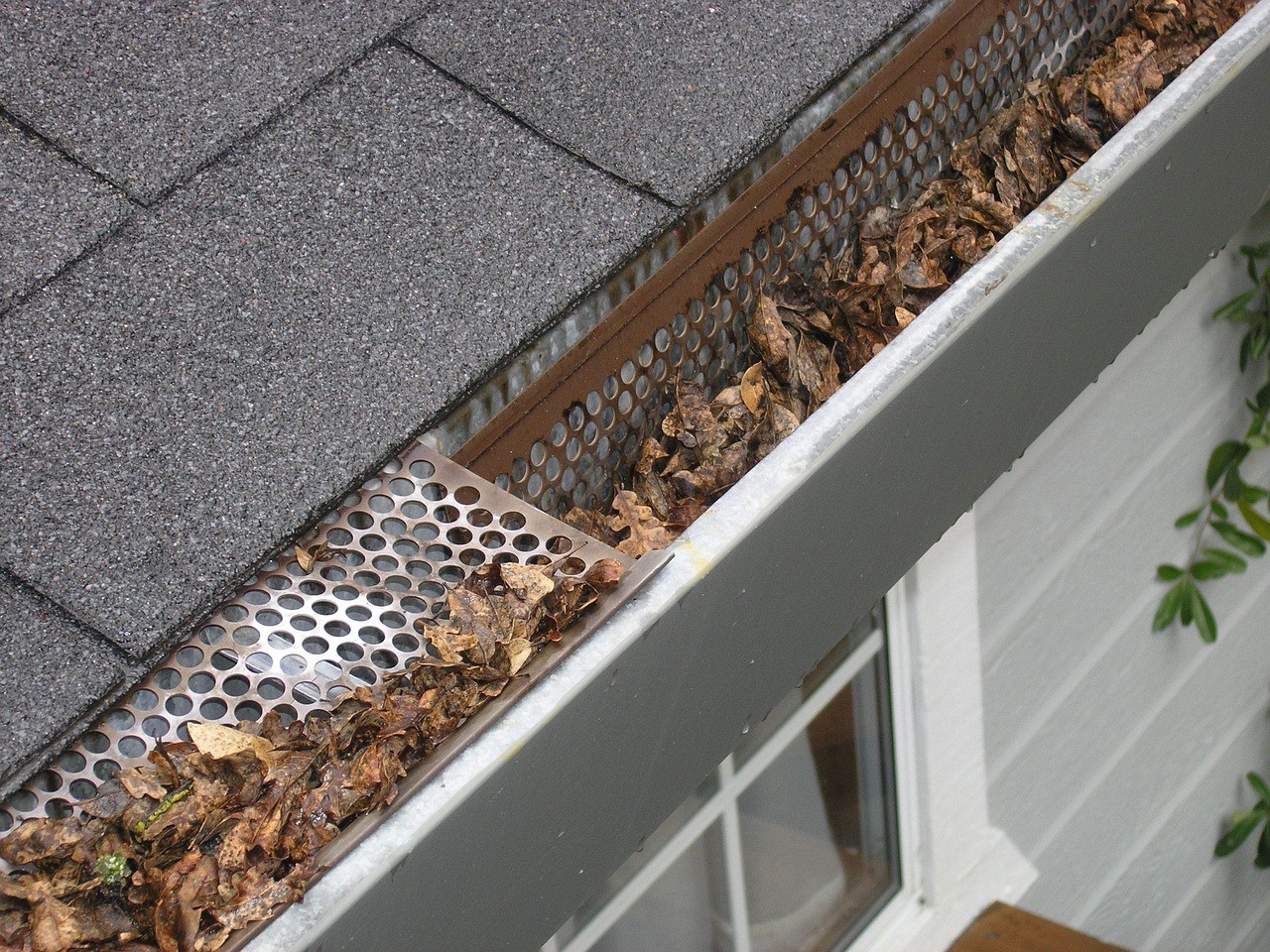
Debris can accumulate on top. On homes with heavy tree coverage — pine trees in particular — debris can pile up on top of the guard and restrict flow from above. The guard keeps the gutter clean, but it needs to be cleared of the debris sitting on it.
They're not a substitute for quality gutters. If your gutters are already failing — pulling away from the fascia, cracked, or improperly pitched — guards won't fix those problems. The foundation has to be right first.
Are Gutter Guards Worth the Investment?
For most homeowners in the Springfield area, quality gutter guards are a good investment under the right conditions:
You have significant tree coverage. Homes surrounded by oaks, maples, sweet gums, or pine trees see the clearest benefit. The debris reduction is meaningful and the reduction in cleaning frequency adds up over time.
You've already invested in quality gutters. Guards make the most sense when the gutters underneath are in good condition and properly installed. If you're replacing gutters anyway, adding guards at the same time is the most cost-effective approach.
You want to reduce ongoing maintenance. Not everyone wants to schedule gutter cleaning twice a year or climb a ladder to clear out debris. For homeowners who'd rather minimize that maintenance, guards are a practical choice.
If your home has minimal tree coverage and gutters that are already performing well, guards are harder to justify. You'd be paying to solve a problem that isn't costing you much time or money.
What to Ask Before You Buy
If you're considering gutter guards, a few things worth clarifying before you commit:
What's the material? Stainless steel micro-mesh outperforms aluminum mesh and anything plastic in both longevity and filtration.
How does it attach? Guards that attach to both the gutter and the fascia or roofline hold up better than those that simply rest in place.
Does it void your roof warranty? Some guard installation methods require lifting shingles. Confirm with your installer that their method won't affect your roofing warranty.
What maintenance is still required? Any honest answer will include some ongoing cleaning — just less frequent than without guards.
If you'd like our honest take on whether gutter guards make sense for your specific home, we're happy to walk through it with you.
K Brothers serves homeowners throughout Springfield, Nixa, Ozark, Republic, Battlefield, and Rogersville — and we'll give you a straight recommendation, not a sales pitch. Learn more about our gutter guard installation service or get in touch to schedule an estimate.